
Financial Planning


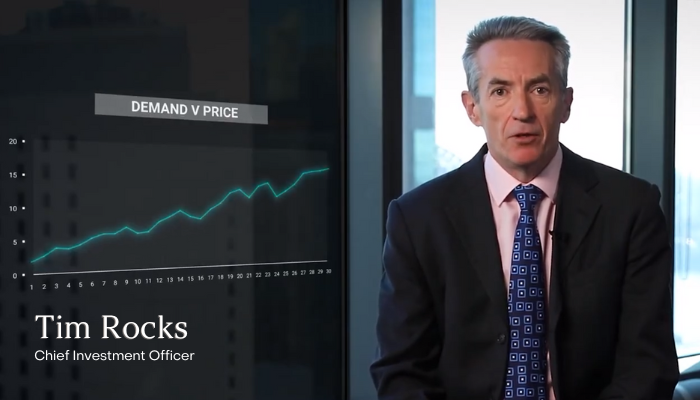
A ‘supercycle’ is a sustained period of abnormal demand for products or services, which results in a protracted period of higher prices. Commodities are particularly prone to such extended price cycles because supply can take some time to respond to changing demand.
There have been six previous supercycles in the past 200 years. These have generally been driven by major changes in demand brought on by wars or major waves of economic development. For historical context, previous supercycles occurred around the same time as:
There are a series of intersecting issues and underlying conditions currently having a combined effect on the state of global commodity markets. And these are not set to significantly change or ease anytime soon.
Issues impacting supply are playing a role in extending commodity price cycles. Mining and energy projects have in general terms become more capital intensive ― which has increased lead times and requires more price incentives. At the same time, COVID-related disruptions to global supply chains have also added another layer of complexity and uncertainty to delivery times.
At the same time there is increasing awareness of the environmental impacts of metal and mineral extraction methods as well as localised environmental issues related to mining at specific locations. This has created additional hurdles for the commodity sector and precluded many projects from proceeding at all.
The current case for a supercycle is largely based on surging demand from decarbonisation. This could see $50 trillion of spending on such areas as transforming electrical networks and infrastructure to facilitate electric vehicles and retrofitting buildings to improve carbon efficiency.
This level of investment will be supplemented by major spending on defence and healthcare and a redesign of the way we manufacture. The overall impact is likely to be exacerbated by significant inertia on the supply side, given exploration and capital expenditure in many commodities has, up until now, remained very low.
On a geopolitical front, there is also the prolonged impact of Russian trade sanctions, which could potentially extend well beyond the current hostilities in Ukraine. This could add further to supply pressures and increase the urgency of the decarbonisation push to reduce the world’s dependence on Russian oil and gas.
The transition to renewables will be commodity intensive. Consider for example:
It’s clear there are challenges ahead. However, a supercycle also presents potential long-term investment opportunities.
A range of commodities are set to benefit from the rush to decarbonise, including copper, nickel, aluminium, lithium, and graphite. And any underinvestment in these sectors means rising demand is likely to lead to higher prices. It’s also worth noting that gold, commodities, and energy exposure can also provide a level of protection against persistent inflation.
This is a rapidly evolving environment and there is still much to play out, so investors are encouraged to speak to their adviser.

Disclaimer
This document was prepared by Evans and Partners Pty Ltd (ABN 85 125 338 785, AFSL 318075) (“Evans and Partners”). Evans and Partners is a wholly owned subsidiaries of E&P Financial Group Limited (ABN 54 60 9913 457) (E&P Financial Group) and related bodies corporate.
This communication is not intended to be a research report (as defined in ASIC Regulatory Guides 79 and 264). Any express or implicit opinion or recommendation about a named or readily identifiable investment product is merely a restatement, summary or extract of another research report that has already been broadly distributed. You may obtain a copy of the original research report from your adviser.
The information may contain general advice or is factual information and was prepared without taking into account your objectives, financial situation or needs. Before acting on any advice, you should consider whether the advice is appropriate to you. Seeking professional personal advice is always highly recommended. Where a particular financial product has been referred to, you should obtain a copy of the relevant product disclosure statement or offer document before making any decision in relation to the financial product. Past performance is not a reliable indicator of future performance.
The information may contain statements, opinions, projections, forecasts and other material (forward looking statements), based on various assumptions. Those assumptions may or may not prove to be correct. E&P Financial Group, its related entities, officers, employees, agents, advisors nor any other person make any representation as to the accuracy or likelihood of fulfilment of the forward looking statements or any of the assumptions upon which they are based. While the information provided is believed to be accurate E&P Financial Group takes no responsibility in reliance upon this information.
The Financial Services Guide of Evans and Partners contains important information about the services we offer, how we and our associates are paid, and any potential conflicts of interest that we may have. A copy of the Financial Services Guide can be found at www.evansandpartners.com.au. Please let us know if you would like to receive a hard copy free of charge.

Fill out this expression of interest and you will be alerted when applications open later in the year.
Begin a conversation with an accountant who can help you with your self-managed super fund.
Begin a conversation with an adviser who will help you achieve your wealth goals.
Subscribe to get Insights and Ideas about trends shaping markets, industries and the economy delivered to your inbox.
Reach out and start a conversation with one of our experienced team.
Begin a conversation with one of our advisers who will help you achieve your wealth goals.
You can search for an adviser by location or name. Alternatively contact us and we will help you find an adviser to realise your goals.