Episode 30
04 Dec 2025


As 2025 comes to a close, seven of our investment experts come together to reflect on the key events that shaped markets this year. In our final video and podcast for the year, they share their perspectives on the themes that could influence 2026 and beyond, helping you stay informed and prepared for what lies ahead.
Watch now to hear their insights.
This podcast was prepared by Evans and Partners Pty Limited AFSL 318075.
Any advice is general advice only and was prepared without taking into account your objectives, financial situation or needs. Before acting on any advice, you should consider whether the advice is appropriate to you. Seeking professional personal advice is always highly recommended. Where this presentation refers to a particular financial product, you should obtain a copy of the relevant PDS, TMD or offer document before making any investment decisions. Past performance is not a reliable indicator of future performance.
Directors, employees and officers of Evans and Partners and its related bodies corporate may have holdings in the securities discussed. Any taxation information is general and should only be used as a guide.
This communication is not intended to be a research report (as defined in ASIC Regulatory Guides 79 and 264). Any express or implicit opinion or recommendation about a named or readily identifiable investment product is merely a restatement, summary or extract of another research report that has already been broadly distributed.
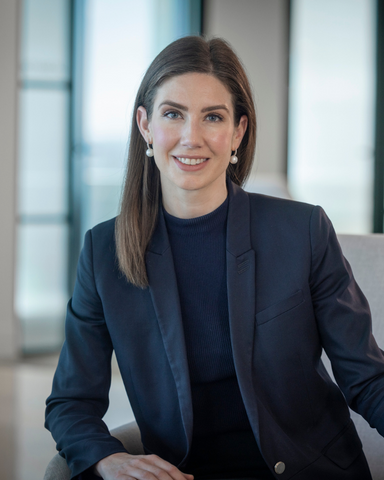
Lucy Meagher
Welcome to the Words on Wealth podcast. My name is Lucy Ma. I’m a Senior Investment Advisor at Evans and Partners and I’m your host for today. As 2025 comes to a close, we sat down with seven of our investment experts to look back on the moments that really moved markets this year. In our final podcast for the year, they share what stood out, what surprised them and the themes they’re watching as we head into 2026. In this podcast, we’ll be hearing from Tim Rocks, our Chief Investment Officer, Max Casey, Portfolio Strategist, Will Hart, Head of ESG and Sustainable Investment, as well as Ishara Rupasinghe, our Senior Strategy Advisor, and Robin Young, Executive Director in our research team. They are also joined by Honor McFadyen and Anne Anderson, independent members of the Evans & Partners Investment Committee. So our first question we put to the experts was, what surprised you most in markets this year?
Here’s what they had to say.
Tim Rocks
The biggest surprise has been that tariffs and all the US melodramas just simply didn’t matter. In the US, the economy has been driven by AI, which has become a macro factor as well as a market factor, and that’s offset some of the weakness elsewhere. And in China, it’s all about their big new export markets. China’s going to report the biggest trade surplus in history.
So tariffs didn’t matter there and that offset some of the weakness. So we ended up having a much, much stronger year in 2025 than anyone expected.
Max Casey
I would say it was China’s deep-seek moment. This was early in the year when a little-known Chinese company backed by hedge fund released a large language model which basically competed with the American equivalence, so think of chat GPT, albeit this was done at a fraction of the cost and performed just as efficiently. As a result, saw tech companies very, very weak and the world effectively realized that China itself was pretty good at AI.
Ishara Rupasinghe
I’d say it’s how resilient markets have been despite all the things that have been happening globally. We’ve got the geopolitical tensions, trade pressures and just general uncertainty. I think for investors, it’s a really good reminder about sticking to the basics. Things like staying disciplined, keeping up with regular contributions to your portfolio, and certainly avoid making knee-jerk reactions. It’s these good habits that can really help get you through years like this and certainly set yourself up for the year ahead, whatever comes our way.
Anne Anderson
The biggest surprise I think was the recovery from the Trump bump and alongside that just the unrelenting run in the data center, the AI trade, just the dispersion in the market, particularly the US.
Honor McFadyen
Two things, the speed of AI adoption globally which boosted corporate margins and consequently expensive equity valuations even got more expensive. And the second thing was the resilience of the US consumer despite the higher rate regime there’s been quite a big divergence between bond and equity market expectations. Equity is priced in a soft landing and strong earnings, whilst bond market’s actually priced a more cautious macro path, particularly in light of the geopolitical backdrop and the Trump trade wars.
Robin Young
biggest surprise for me this year was that after a very strong 2024, the bank sector continued its strong outperformance through most of this year, despite valuations remaining very, very high. I think it’s interesting to note now that from the November reporting season, things have started to correct and the market has recognized that overvaluation, but the extent of that momentum was certainly a surprise.
Will Hart
The performance of the clean energy index, think despite the negative rhetoric across the political spectrum, Trump winding back the Inflation Reduction Act, the sector broadly is up circa 40 % year to date, materially outperforming markets and conventional energy
Lucy Meagher
Now looking to the year ahead, we wanted to ask our experts what is the most important trend or risk investors should be watching in 2026?
Max Casey
We’ll be watching for risks in private assets, in particular private credits. There’s been a lot of money that’s flown into that asset class over the last couple of years, driven by very attractive yields. We have started to see some weakness or some ⁓ kind of high profile bankruptcies occur in that market. So we wouldn’t be surprised to see that kind of transpire a little bit more in 2026.
Tim Rocks
We think interest rates are going to be pretty interesting in 2026. The RBA is forecast to increase interest rates now as inflation has started to bubble away. But at the same time, Trump is trying to take control of US rates and push them down. That’s a very interesting dynamic with Aussie rates up, US rates down, that could put a lot of pressure on the Aussie dollar, for example. It’s been about 10 years since Aussie rates were above US rates. So a lot of interest rate volatility, a lot of currency volatility. Investors can protect themselves against that by having a bit more hedging. But anyway, it’s going to be an interesting year.
Ishara Rupasinghe
strategic point of view it’s no doubt the division 296 tax legislation that’s expected to be finalised sometime early in 2026 and that’s going to mean extra taxes for large superbalances. So people that aren’t affected should really be planning ahead now considering whether a restructure of their super assets is necessary, do they consider rebalancing strategies and other options that can help potentially minimise the impact of this proposed legislation.
Anne Anderson
think the biggest risk is watching for whether there’s a latent inflation pulse coming through from the tariffs. We haven’t seen that yet. That and what that might do to growth.
Honor McFadyen
of AI productivity ⁓ broadens beyond tech, finance and logistics into slower moving sectors such as healthcare, construction and public administration. Does this capex spend actually translate into a multi-year output gain in both the US and Australia? Just one tail risk that I want to highlight with respect to 2026 might be the general consensus that de-dollarization of the US dollar is going to continue. But what could actually happen based on what I’ve said could be the ⁓ continued AI adoption globally is that it actually might mean there is stabilization of the US dollar or even a small rally as the Trump trade shock dampens and the capex supercycle actually continues attracting global investment into the US. So the US dollar actually may remain higher than the general consensus.
Robin Young
In terms of 2026, I’ll be paying close attention to the healthcare sector. Domestically, it’s now been under performer for five years, and that really accelerated this year, particularly with major names such as CSL underperforming a lot. The longer term thematics are really important for this sector and they’re very positive particularly around the impact to the ageing population. Some of the shorter term themes around cycling and COVID highs and also the impacts from US policy are starting to even out a little bit now so we think that’s a sector worth looking at closely in 2026.
Will Hart
Political influence on the Federal Reserve, I think with the US midterms coming up ⁓ next year there is pressure on the Fed to cut rates and in particular there’s a number of new appointments to the Federal Reserve and I think if we start to see political appointees and influencing ⁓ monetary policy that could cause ruptures across global equity markets, particularly if there is perceived to be a lack of independence with regards to decision making.
Lucy Meagher
As we head into the holidays with more time to reflect, we asked our experts what their highest conviction investment idea is for 2026.
Max Casey
We can continue to see the Australian dollar trend higher against the US dollar, sits at about 66 US cents at the moment. We could see that heading north of 70 cents. This is really due to the diverging policy stances of the US Fed and the RBA. We think the RBA is going to be on hold for the near future, maybe even a hike in 2026 while the Fed will be continuing to ease aggressively. Importantly for investors, this does mean that if you are allocating offshore you should be doing so more on a hedge basis than on hedge basis going forward.
Tim Rocks
My strongest idea for 2026 is copper. There’s a few reasons why. Number one, global growth we think will continue to get better next year. And that’s always a positive for copper and commodity demand. Number two, we think copper is really going to be at the heart of the next wave of the AI trade. The big story about AI will be data center demand that requires power grid investment. That is potentially the biggest constraint. What we were going to see is that really accelerate next year and copper will be a major winner. Then the final story is that there’s simply been no investment in new mine supply for a long, long time. So demand up, supply not doing anything, copper prices rise and the stocks linked to that go up as
Anne Anderson
Into next year, I think the opportunities investing in the transition phase, the renewables, but one thing I think investors need to think about very carefully is the format, the protection, regulated cash flows, strong documentation and visibility on risks.
Honor McFadyen
Because inflation is likely to be a lot more sticky than we had originally anticipated, think long wheel assets such as data centers, regulated utilities, digital infrastructure or certainly as AI and electrification could actually drive a super cycle. Potentially be long rates in data centers, long regulated utilities that are hedged to what I mentioned as sticky inflation.
Robin Young
I think investors should be looking at the retail property sector and we think that shopping center landlords are in really good space over the medium term. That’s really being driven by a couple of factors. It’s a lack of supply. We’re not building new sensors anymore and secondly very strong demand from retailers who are making good money at the moment and clearly looking for new space that isn’t being built. So we’re quite excited about the outlook for rent growth in the retail property sector and we think that’s somewhere investors should be
Will Hart
So generally speaking, I think it’s the healthcare sector. I think there’s three reasons. So think valuations look attractive on a relative basis versus the broader market. think secondly, we are starting to see some form of policy certainty across the US with regards to healthcare regulation. And then thirdly, think ⁓ long-term demand is really underpinned by aging demographics.
Lucy Meagher
And that brings us to the end of our final episode for 2025. Thanks to all our experts for the great insights and to you for tuning in this year. Wishing you all a safe and happy holiday season. We look forward to bringing you more conversations in 2026.
This podcast was prepared by Evans and Partners Pty Limited AFSL 318075.
Any advice is general advice only and was prepared without taking into account your objectives, financial situation or needs. Before acting on any advice, you should consider whether the advice is appropriate to you. Seeking professional personal advice is always highly recommended. Where this presentation refers to a particular financial product, you should obtain a copy of the relevant PDS, TMD or offer document before making any investment decisions. Past performance is not a reliable indicator of future performance.
Directors, employees and officers of Evans and Partners and its related bodies corporate may have holdings in the securities discussed. Any taxation information is general and should only be used as a guide.
This communication is not intended to be a research report (as defined in ASIC Regulatory Guides 79 and 264). Any express or implicit opinion or recommendation about a named or readily identifiable investment product is merely a restatement, summary or extract of another research report that has already been broadly distributed.
Fill out this expression of interest and you will be alerted when applications open later in the year.
Begin a conversation with an accountant who can help you with your self-managed super fund.
Begin a conversation with an adviser who will help you achieve your wealth goals.
Subscribe to get Insights and Ideas about trends shaping markets, industries and the economy delivered to your inbox.
Reach out and start a conversation with one of our experienced team.
Begin a conversation with one of our advisers who will help you achieve your wealth goals.
You can search for an adviser by location or name. Alternatively contact us and we will help you find an adviser to realise your goals.